Lamu Old Town at a glance
Lamu Old Town was inscribed on the UNESCO World Heritage List in 2001 under criteria (ii), (iv) and (vi). The listed area covers 15.6 hectares. UNESCO points to Swahili building traditions and a town plan shaped by African, Arab, Indian and European influences, to its past as a port and trading town, and to its lasting role in Islamic and Swahili learning.
The town is not a ruin or an open-air museum. People live, work and pray here. Houses are built of coral stone and mangrove timber, with inner courtyards, verandas and carved doors, and the lanes are narrow. The listing covers the old town, not every beach on the island, so Shela is a separate place with its own guide.
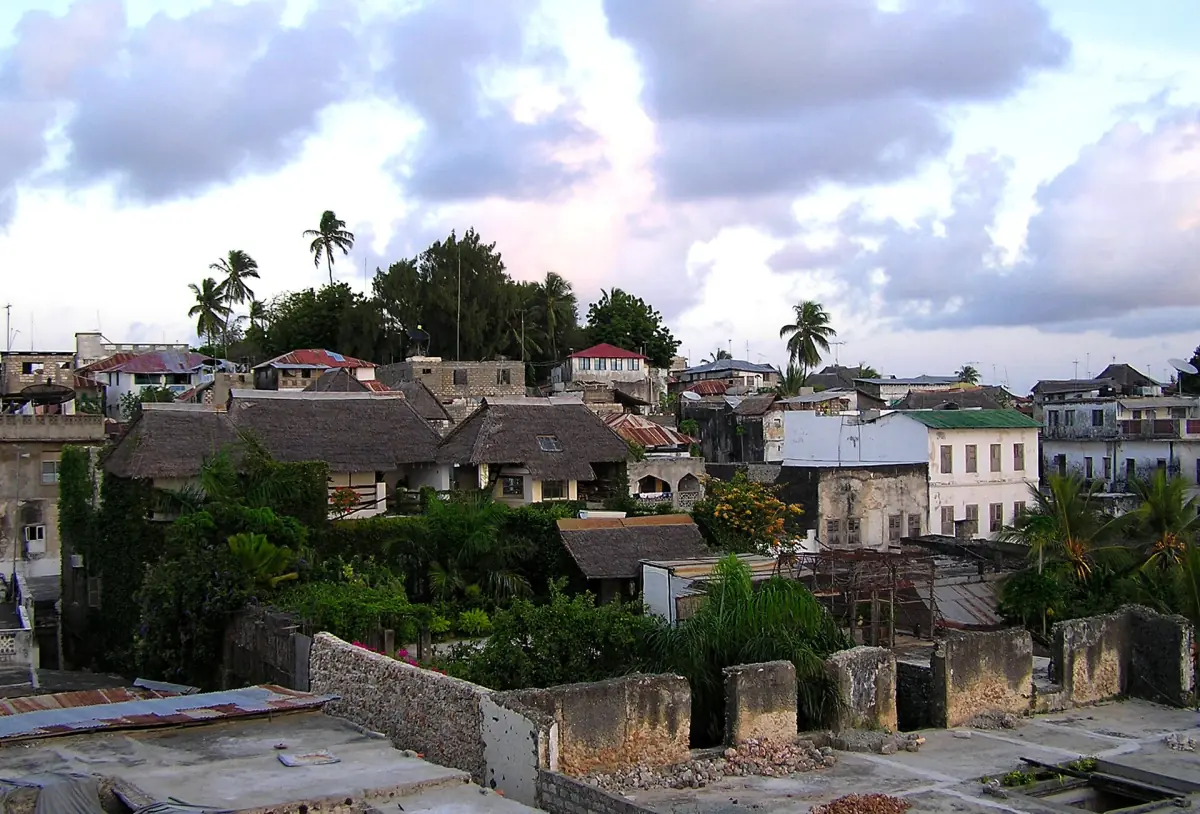
Lamu Town: how to get around
Lamu Town is small enough to explore on foot. Most visitors arrive by boat at the waterfront and walk from there. Give yourself time to wander, and keep the waterfront as your point of orientation when the lanes start to look alike.
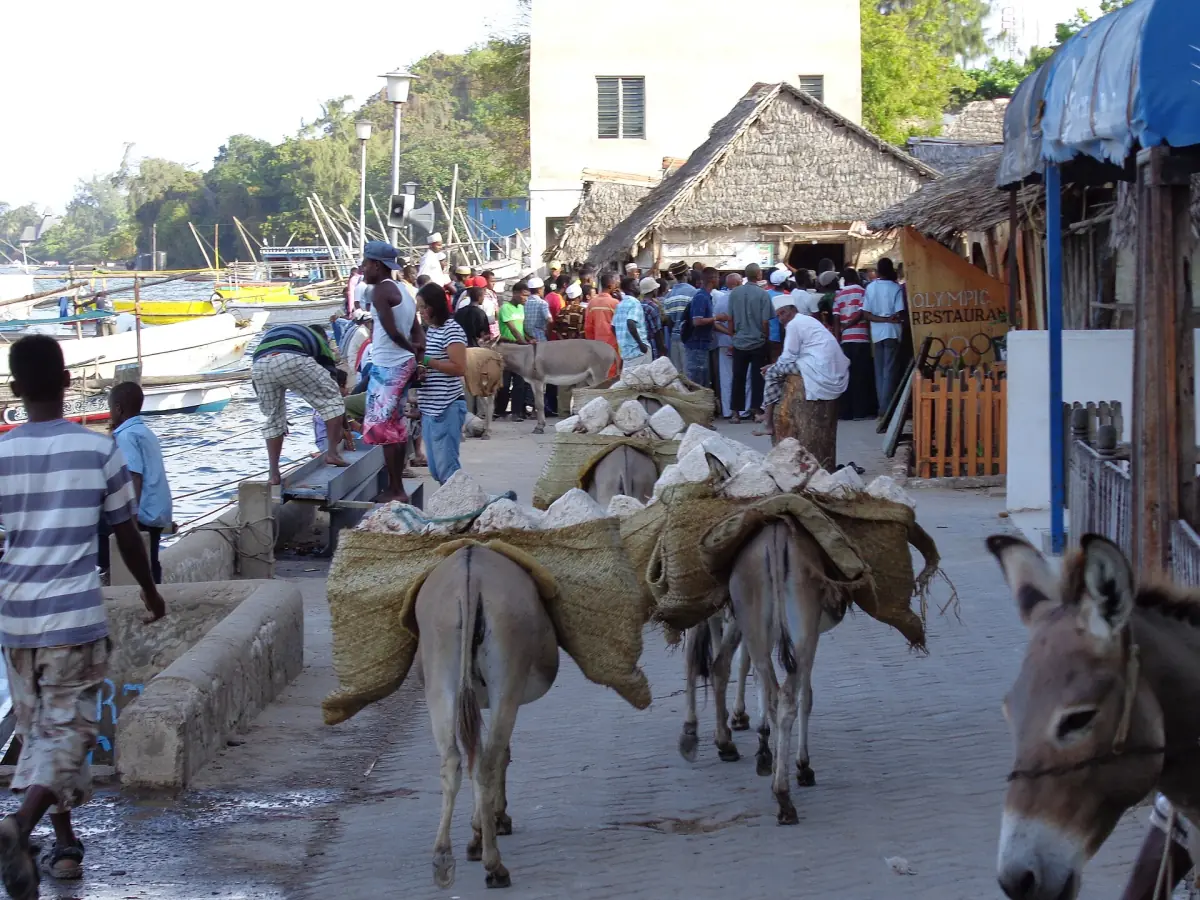
Donkeys carry people, goods and building material, so step aside when you hear one coming. Do not expect a town without engines: a press report from 2026 mentions a motorcycle in the old town. Wear closed or sturdy shoes, because the lanes can be uneven and wet after rain.
A guided walk takes about two to three hours and is a good way to understand the houses, the doors and the mosques from outside. A guide also helps with the etiquette below. Agree the length, the price and what is included before you start.
Our picks: Lamu Old Town
Guided walks through the old town, from a short walk to a full day with lunch.
Hand-picked tours, booked through GetYourGuide. Prices are indicative starting prices in US dollars (as of October 2026). Tap a tour for live availability and the current price in your currency.

Old Town tour, Swahili lunch and sunset dhow cruise
Hotel transfer, an English-speaking local guide, heritage and museum entries, a Swahili seafood lunch and a two-hour dhow cruise.
Check availability →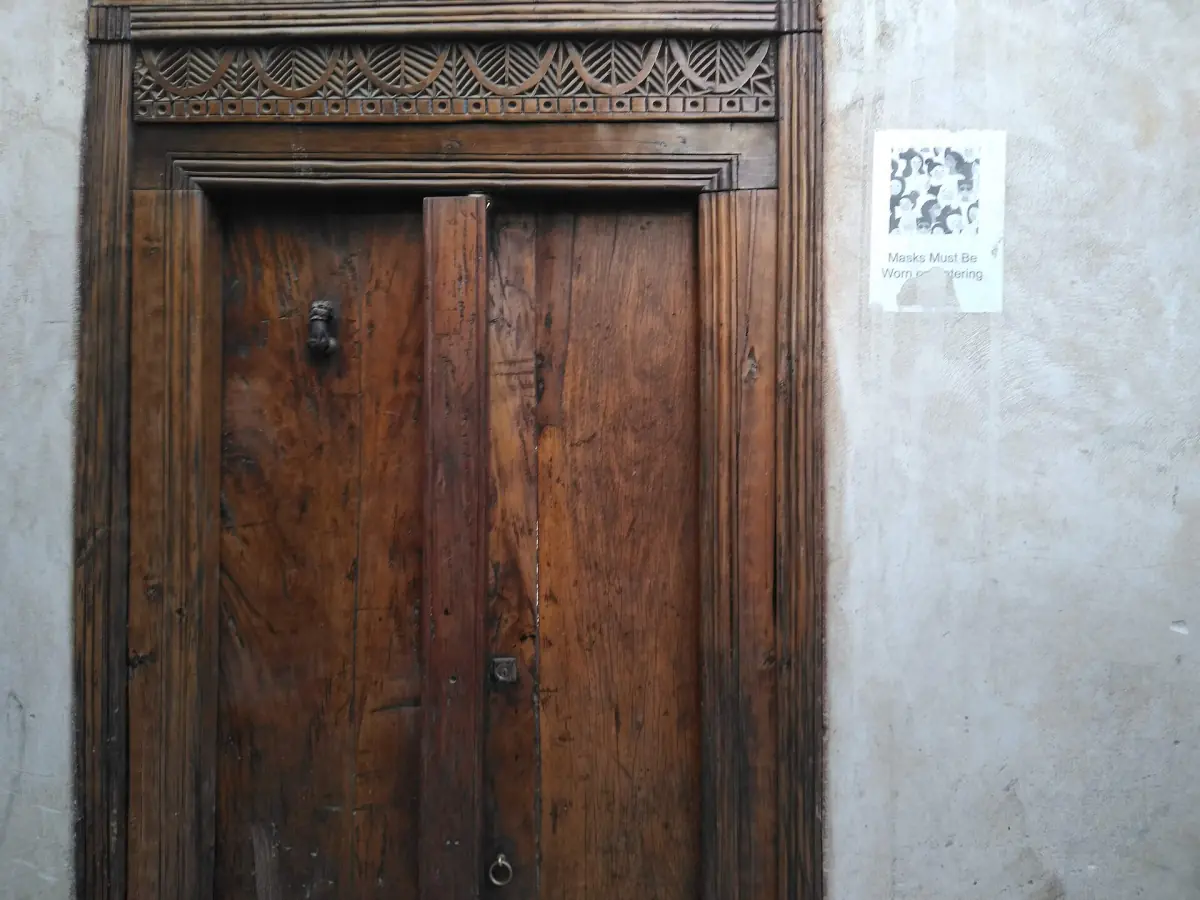
Swahili carved doors walk with a woman woodcarver
A walk through the old town that explains Swahili culture and the carved doors, plus a stroll through Shela.
Check availability →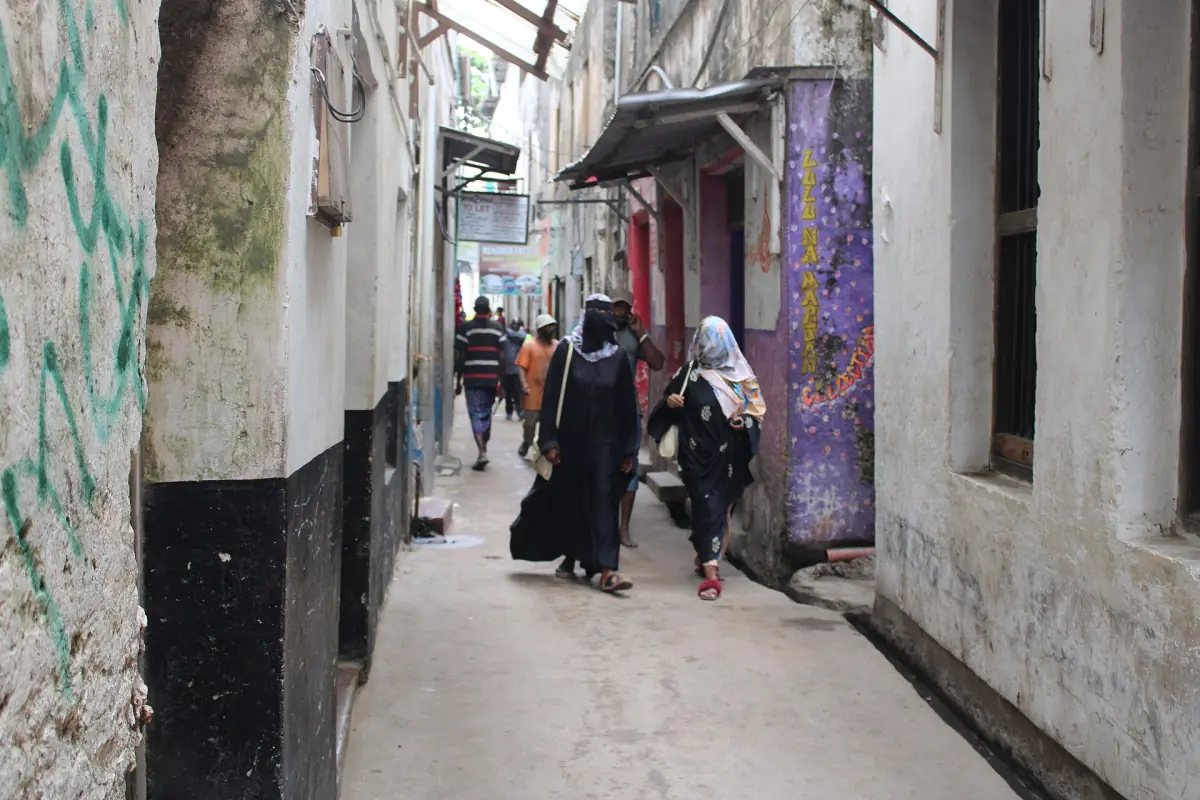
Guided walk through Lamu Old Town
A guided walk with a visit to the fort and an old mosque, through the markets and past local life. Entry fees for sites such as the Lamu Museum and the fort are listed separately.
Check availability →Old town walks and cultural tours in Lamu
Guided walks through the old town, carved door tours with a woodcarver and sunset dhow cruises, with live prices and availability.
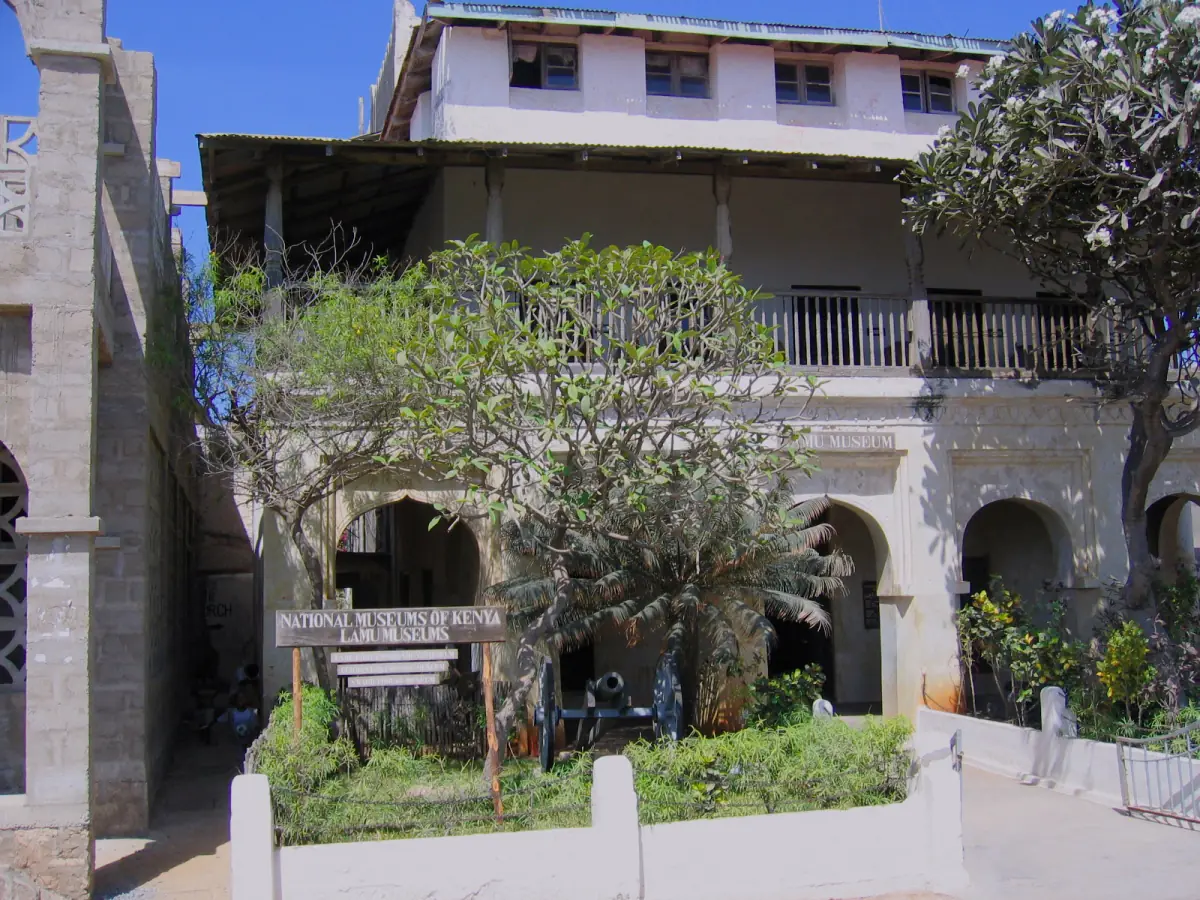
Lamu Museum
The main museum, on the waterfront, run by the National Museums of Kenya.
The Lamu Museum holds ethnographic and maritime collections. They include Swahili doors, archaeology, clothing, jewellery, furniture and musical instruments. It is the best place to see how the carved doors you pass in the lanes are made and what the patterns mean, so it works well at the start of a visit.
The museum is one of four sites in the combined pass, together with the Lamu Fort, the Swahili House and the German Post Office. Opening hours and prices are in the table below. Confirm on the day that the Swahili House and the German Post Office are open before you plan around them.
Lamu Fort
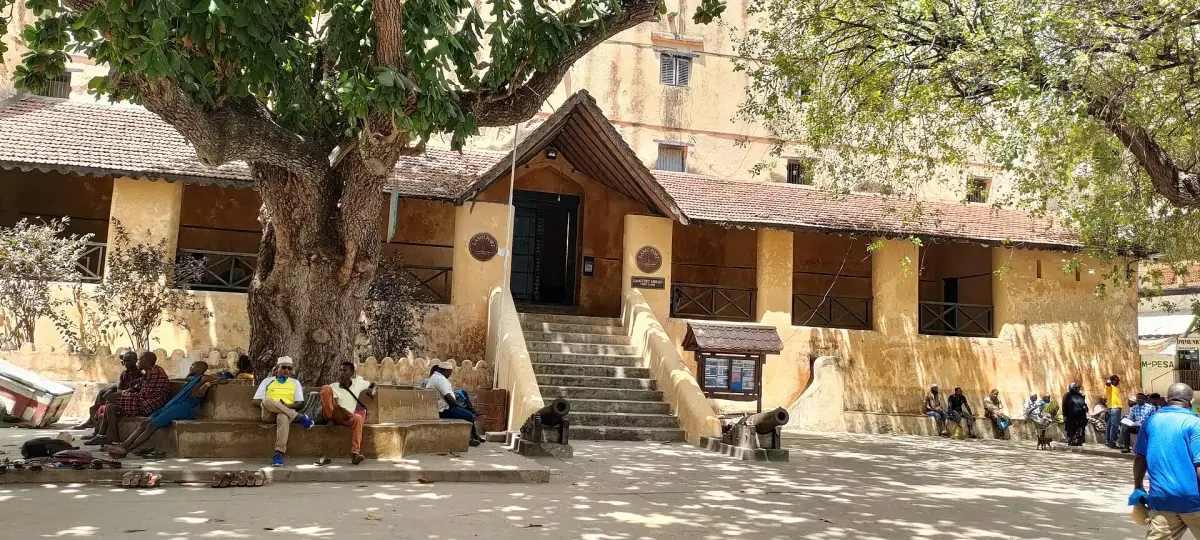
The big building on the main square.
The National Museums of Kenya describes the fort together with its library. The building served as a prison from 1910 to 1984 and opened to the public in 1986 after restoration. The museum page also describes the library as a reference library, so ask at the entrance what visitors may see.
A guided old town walk can include a look at the fort, but the entrance fee may be listed separately from the tour price. Check the tour page before you book.
Museum and fort prices 2026
Adult / child, in force since 7 May 2026 according to the National Museums of Kenya.
| Site | Kenyan and East African citizens | Residents and other Africa | Visitors from outside Africa |
|---|---|---|---|
| Lamu Museum | KES 200 / 100 | $6 / $3 | $10 / $4 |
| Lamu Fort | KES 200 / 100 | $6 / $3 | $10 / $4 |
| Swahili House | KES 200 / 100 | $6 / $3 | $10 / $4 |
| German Post Office | KES 200 / 100 | $6 / $3 | $10 / $4 |
| Combined pass, all four | KES 750 / 400 | $24 / $12 | $40 / $16 |
The National Museums of Kenya names eCitizen as the payment route and does not accept cash. Tickets are also sold at the entrance counters. Ask when you buy how long the combined pass is valid. The Swahili House is documented by the Zamani Project, but that does not tell you whether it is open today. The same price list covers the Takwa ruins and the Siyu Fort.
Donkey Sanctuary
Donkeys are the main working animal of the island.
Donkeys carry loads along the waterfront and through the lanes, and a donkey sanctuary on the island is a stop for some visitors. A press report of 25 March 2026 says the sanctuary closed its buildings temporarily from 20 March 2026 for structural and safety reasons. A vet quoted there called the closure temporary.
One undated directory lists opening hours from Monday to Saturday, 08:00 to 17:00, without mentioning the closure. Check the current status before you plan a visit. If you want to support the work, contact the sanctuary directly.
On the street, do not feed, ride or photograph donkeys that are working with their load. Leave the lane clear for them.
Dress and behaviour
Lamu is a conservative, mostly Muslim town.
Cover up in town
Local hotels ask visitors to dress modestly in towns and villages. The UK Foreign Office asks for conservative clothing along the mainly Muslim coast outside hotels and resorts, especially near religious sites. Cover shoulders and knees, men and women alike. Swimwear belongs on the beach, such as Shela beach.
Ask before you photograph
Always ask people before you take their photo, and respect a no. Do not photograph women, prayer or children without permission. Ask before you photograph a doorway that is clearly a private home.
Mosques are places of worship
Do not assume you may enter a mosque. Access for non-Muslims and visiting times depend on each mosque. Ask your hotel or guide, keep quiet near the call to prayer and never walk in during prayer.
Ramadan
During Ramadan, many people fast from dawn to sunset. Do not eat, drink or smoke in public during the day,. The dates move each year, so check them before you book.
Carved doors and stone houses
What to look for in the lanes.
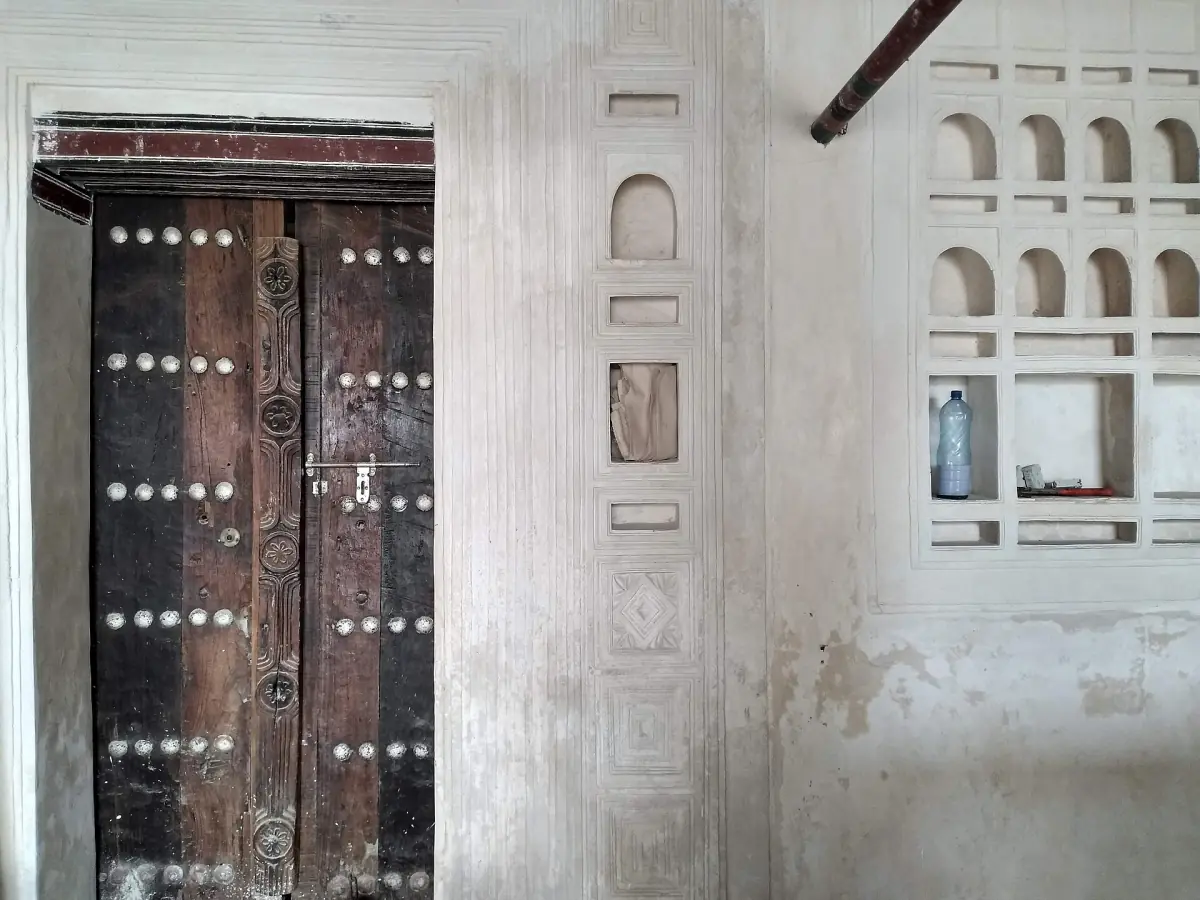
The doors are the most visible craft in Lamu. Many are carved, and some sit in stone niches. You see the best of them by walking slowly and looking up as well as ahead. The Lamu Museum includes Swahili doors in its collection, and a short tour with a woodcarver explains the motifs.
Coral stone and mangrove timber give the houses their look. Inner courtyards and verandas keep the rooms shaded. Many houses are private homes, so look from the lane and do not step in without an invitation.
For a longer plan, combine the old town with the beach at Shela or an evening on the water. The dhow trips page explains the options. If you need a bed in the old town, see where to stay.
Lamu Old Town: frequently asked questions
Is Lamu Old Town a UNESCO World Heritage Site?
Yes. It was inscribed in 2001 under criteria (ii), (iv) and (vi), and the listed area is 15.6 hectares. The listing covers the old town and its surroundings, not every beach or village on the island.
How much does it cost to enter the Lamu Museum and Fort?
Since 7 May 2026, visitors from outside Africa pay $10 per adult and $4 per child for each of the four museum sites, or $40 and $16 for the combined pass. Prices for Kenyan citizens and for residents are in the table above. Payment runs through eCitizen, and cash is not accepted.
When are the museums open?
The National Museums of Kenya gives daily opening hours of 08:30 to 17:30, including public holidays. Individual sites can differ, so check on the day.
Is the Donkey Sanctuary open?
A press report says it closed its buildings temporarily from 20 March 2026. A directory entry that lists opening hours is undated. Confirm the current status before you go.
What should I wear?
Dress modestly: cover shoulders and knees. Lamu is a conservative Muslim community, and the UK Foreign Office asks visitors to the coast to dress conservatively outside resorts and hotels, especially at religious sites.
Can I enter the mosques?
Do not count on it. Access for non-Muslims and visiting times depend on each mosque. Ask your hotel or guide, and admire the buildings from outside unless you are invited.